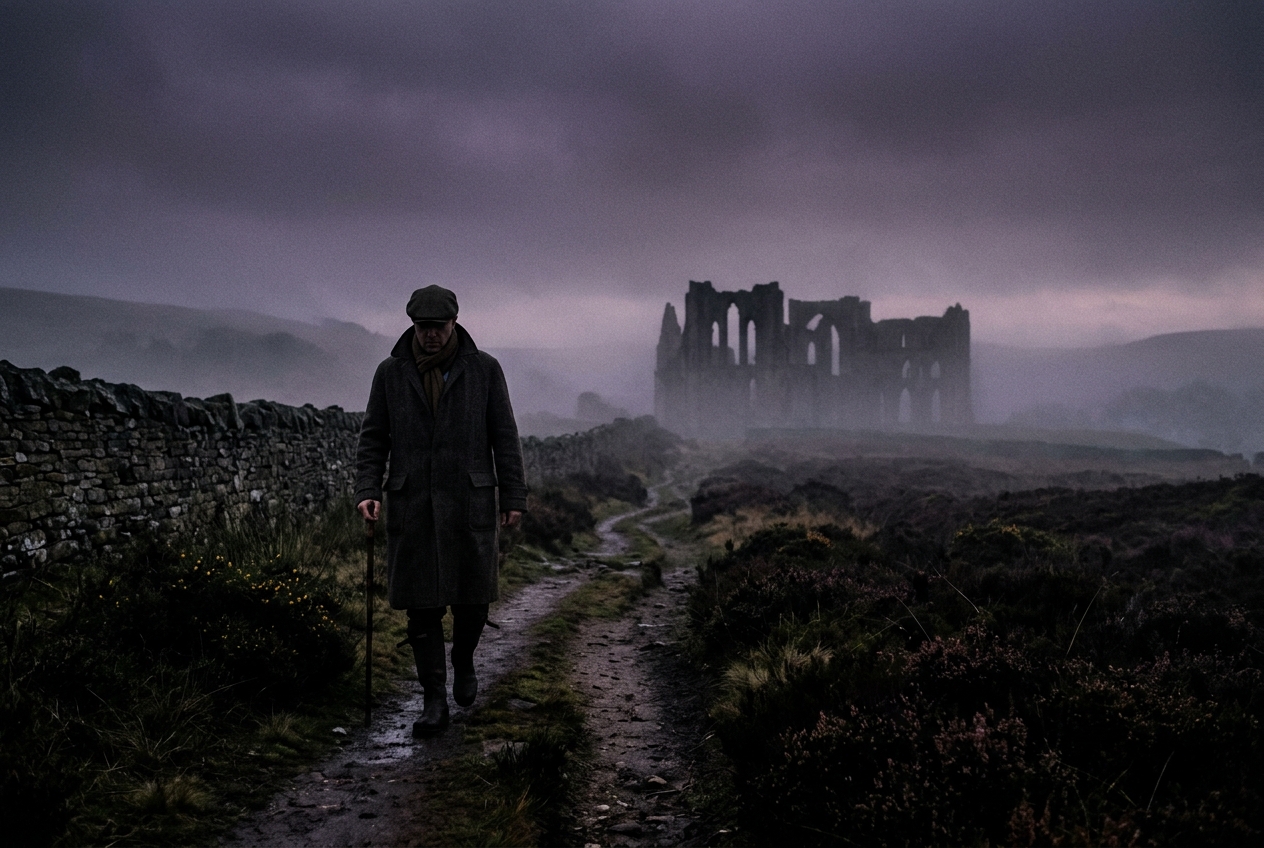
The rain came sideways through Wychford Parva that morning, blown off the fens in grey sheets. Nellie Vane pulled her shawl tight and ducked beneath the lintel of the Bell and Hound, shaking water from her hair.
Goody Barker was at the hearth, stirring something that smelled of onions and old mutton. The common room stood empty but for a drover asleep by the window, his face turned to the wall.
— Shut the door quick, Nell, Goody said, not looking up. — And come here.
Nellie did as Goody asked. She knew the tone. Goody Barker had used it the night her husband died. And again when the plague took the Miller boy, and once more when the soldiers came through in forty-four.
— What is it?
Goody set down her spoon. She wiped her hands on her apron and looked at Nellie for a long moment, as though measuring her against some private rule.
— Tobias Fenn was here last night. Rode in late, took a bowl of pottage and a bed. Went off before cockcrow.
— Fenn, Nellie said. The name sat heavy on her tongue.
— Aye. And he told me, over his cup, that his master is coming. Hopkins himself. Three days, maybe four. He has a list, Nell. A list of names from these parts.
Nellie felt the cold climb her spine as though someone had laid their hand there.
— How do you know my name is on it?
Goody laughed, short and dry.
— Child. I have known what you are since you were ten years old and mended the cat that the carter crushed. I saw you lay your hands on the thing. I said nothing then and I say nothing now. But Fenn is no fool, and his master is worse than no fool. He is a man who finds what he looks for, whether it be there or no.
Nellie sat down on the bench. Her hands would not keep still.
— What am I to do, Goody?
— Run. That is the first thing. But not far, for they watch the roads. There is a man at the edge of the village, in the cottage past the elder hedge. Alfred, they call him. Alfred the Old.
— I know the house. I have never seen him.
— Few have, these years. He keeps his own counsel. But I have reason to think he will know you, and know what to do. Go to him now, Nell. Do not stop for your things. Do not go by your mother’s grave. Go now.
Nellie rose. At the door she turned.
— Why do you help me, Goody?
Goody Barker took up her spoon again.
— Because they hanged my own grandmother at Bury in the year of my birth, and she was no more a witch than that chair. If there be women in the world who have the old sight, let them keep it. The Lord made them so. Go on, girl.
The cottage sat low beneath a thatch so mossed it looked part of the earth. Smoke rose from the chimney, thin and blue. Nellie knocked, and the door opened before her knuckles had left the wood.
The man inside was tall and bent, white-bearded, with eyes the colour of wet slate. He wore a long gown of undyed wool, and about his neck hung a small bag on a leather thong.
— Come in, Nellie Vane. I have been expecting you some while.
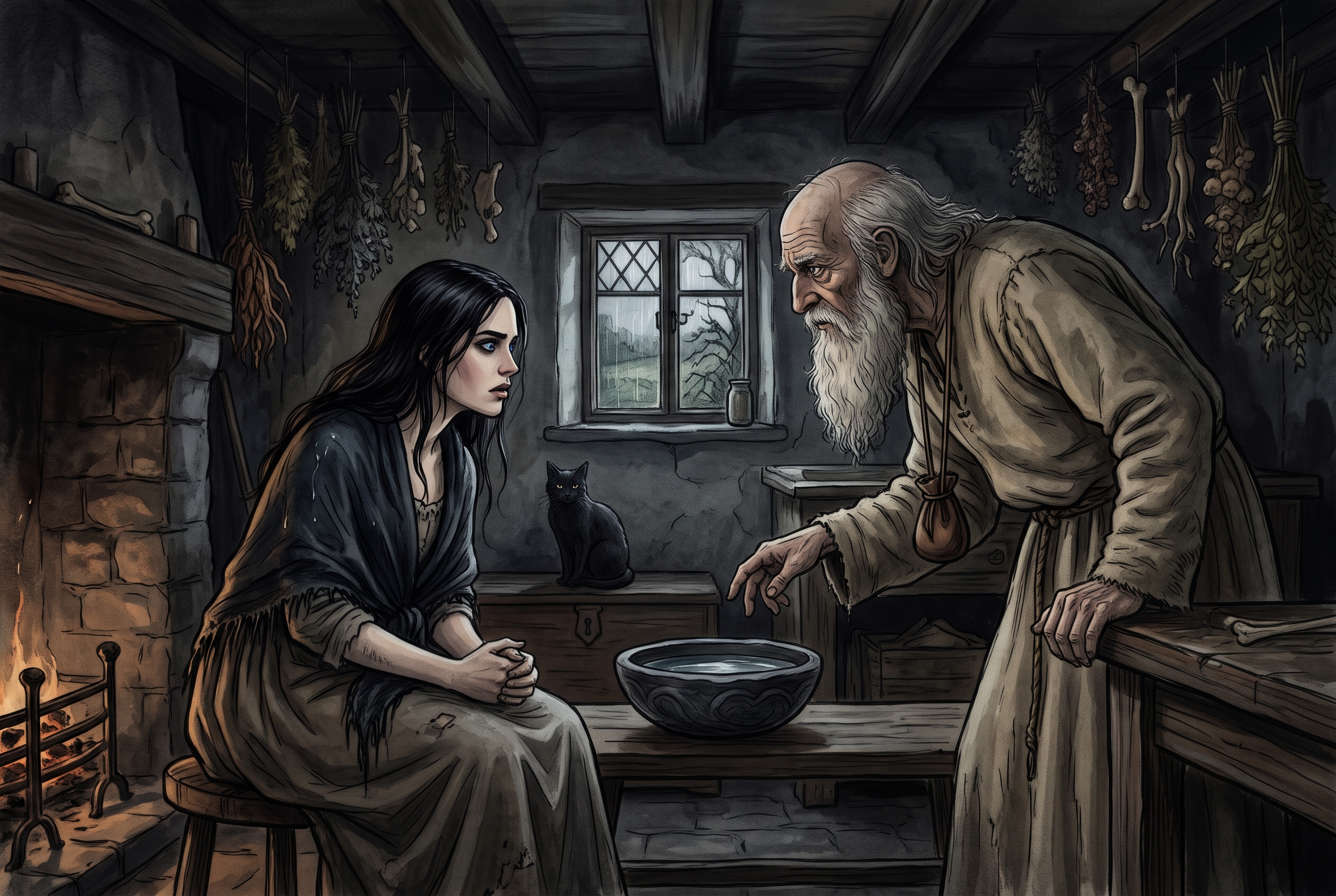
She stepped across the threshold. The room was warmer than it ought to have been for so small a fire. Herbs hung in bunches from the beams, and a black cat watched her from the top of a chest.
— Goody Barker sent me, she said.
— Goody Barker was the hand. The sending was older than her.
He gestured to a stool and she sat.
— Hopkins is coming, she said.
— I know it. He has done his work in Manningtree and Mistley and Chelmsford, and now he turns his horse this way. He will come to this village. He will take three women and a man. He will hang them at Lavenham before the month is out.
— My name is on his list.
— Your name is on many lists, child. In many books. Some that no man has ever opened.
Alfred the Old stood and went to a shelf. He took down a bowl of black stone, and into it he poured water from an earthen jug. Then he beckoned her near.
— Look.
She looked. The water showed her nothing but her own face, pale and frightened.
— I can hide you from Hopkins, he said. — That is a small thing. I can make his eye slide over you as though you were a shadow at noon. I can send him from this place believing he has done his work.
— Then do it. I beg you.
— I will do it. But hear me, Nellie Vane, for there is a price, and the price is not mine to lift once laid.
She waited. The cat on the chest had not blinked.
— I am old, he said. — Older than this village. Older than the church that stands in it, and the one that stood before. I have carried a burden since the Romans walked these fens, and I am weary. The burden is this. There are souls that slip between the worlds, that lose their road. They need a hand to guide them. Without such a hand they wander, and madden the living, and curdle the places where they linger. I have been that hand. Now I would lay it down.
— You would put this upon me?
— I would. In the hiding you will become another. You will not sicken. You will not age. The Witchfinder will not find you, nor any after him. But you will walk the roads of England until the last soul crosses and you will know the weight I have carried. That is the bargain. Say yes or no.
Nellie looked into the black bowl. The water had stilled. And in it she saw not her face but a long road, and figures moving on it, and herself among them, and no end.
— Yes, she said.
Alfred the Old smiled, and it was the smile of a man setting down a stone he has carried a thousand years.
— Then I shall hide you, he said, and laid his hand upon her brow.
Outside, the rain had stopped. Somewhere on the Bury road, a man in a dark coat was riding. And his horse threw up small arcs of water with every step. He did not yet know that the name of Nellie Vane had, like smoke on the breeze, left his list.